Theme Park Manager
Supercent, Inc.Simulation
4.5296.00 Reviews
- Version
- 16.3.0
- Installs
- 1.00M
- Age Rating
- Everyone
Screenshots
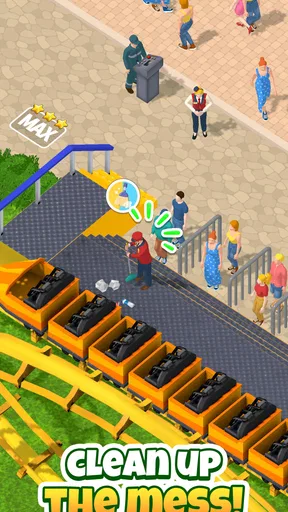
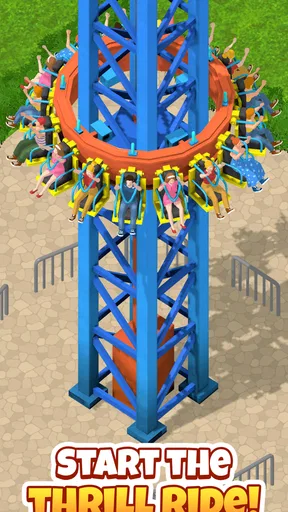
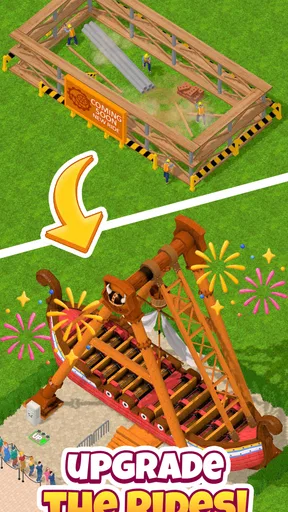
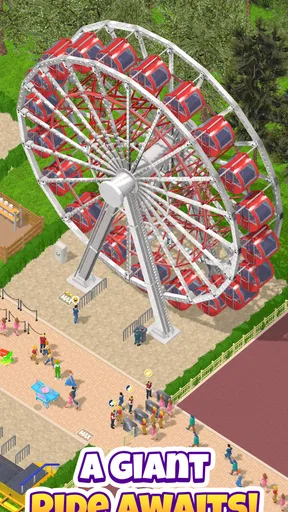
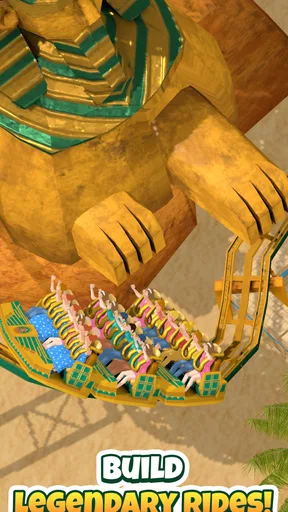

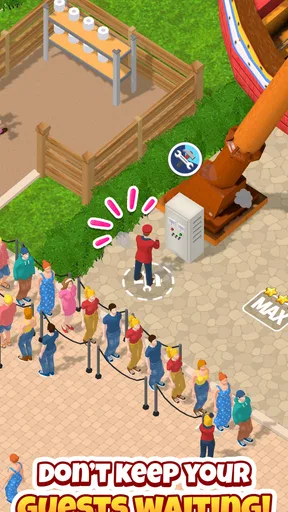
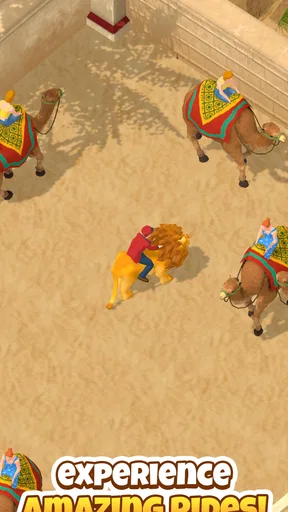
Our Review of Theme Park Manager
 Analysis by Appyee
Theme Park Manager is the kind of simulation game I open when I want a small, clear objective rather than a complicated strategy project. I start with an empty-looking park, work toward a more attractive attraction, and gradually turn a basic space into somewhere that feels worth visiting. The appeal is easy to understand: build a roller coaster, manage a theme park, and keep improving the experience one step at a time. What matters in practice is how well that loop keeps giving me a reason to continue after the first few upgrades.
Developed by Supercent, Inc., this free game sits in the simulation category and is suitable for Everyone. It has reached over a million installs and holds a 4.4 average from around 27 thousand ratings, which gives it a substantial audience without making it feel like an intimidating management product. I see it as a casual park-building game first and a detailed business simulator second. That distinction is important if you are deciding whether it matches your taste.
How the first goals pull you into the park
The opening experience works because the objective is immediately readable. I do not need to study a long rulebook before understanding what I am supposed to do. A ride, a park area, and the promise of a larger attraction give the early minutes a useful sense of direction. For someone who enjoys visible progress, that simplicity is a strength: each action feels connected to making the park more complete.
The roller coaster is the natural focal point. It gives the game a stronger identity than a generic decoration simulator because I am not only arranging a pretty space; I am working toward an attraction that represents the park’s growth. Even when the early tasks feel modest, the idea of eventually having a more impressive coaster helps the small steps feel relevant.
I particularly like this setup for short sessions. If I have only a few minutes, I can make progress without needing to remember a complex chain of production rules. The game is also approachable for players who normally avoid management games because menus and numerical planning can become overwhelming. Here, the theme does much of the explaining. A new ride or a better-looking area is easier to understand than an abstract percentage improvement.
That accessibility comes with a trade-off. Players looking for deep economic simulation may find the early objectives too guided. The game is more comfortable showing me the next useful action than asking me to invent an entire business strategy. I would recommend it to someone who likes structured goals and visible construction, but not to a player expecting the open-ended challenge of a large desktop-style theme park simulator.
Small decisions matter more than they first appear
One useful way to approach the opening is to resist treating every improvement as equally urgent. I get more enjoyment when I think of the park as a sequence of priorities: first make the attraction functional, then improve the parts that make the park feel coherent, and only afterward chase optional polish. This prevents the early game from becoming a random series of taps.
That order also helps with a common mobile-game problem: spending resources simply because they are available. A new object can look appealing, but a better immediate goal may be the upgrade that moves the park closer to its next meaningful milestone. I found that the game feels more purposeful when I pause briefly and ask whether an action changes the park’s earning or growth potential, rather than choosing the most visible button.
Another practical tip is to treat each session as a small planning cycle. I check what the current objective is, complete the action that supports it, and stop once the next step would require more waiting or repetitive work than I want to do. This keeps the game relaxing instead of turning it into a chore. It is a simple habit, but it makes the early progression feel more deliberate.
Progress signals that make improvement easy to read
A good casual simulation needs to show progress clearly, and Theme Park Manager benefits from the visual nature of its subject. A park that gains attractions and structure communicates improvement more effectively than a plain list of statistics. I can look at the space and understand that it has developed. That visual feedback is one of the game’s strongest reasons to keep playing.
The progress loop is also easy to explain to a friend: work on the park, unlock or improve the next useful part, and use the result as motivation for the following goal. I do not need to memorize a complicated technology tree to feel that the park is advancing. The attraction itself becomes a progress marker, while the changing layout gives the journey a sense of place.
For me, the most satisfying moments are not necessarily the biggest ones. They are the points where a previously plain section starts to look intentional. A park can feel more successful when its rides and spaces appear to belong together, even if the underlying action was only a small improvement. This is where the game separates itself from a purely checklist-driven idle experience: the visual result gives the checklist a physical outcome.
Still, the simplicity can limit long-term satisfaction. If you want every decision to produce a new strategic problem, the progress signals may eventually feel too familiar. The game’s feedback is strongest when I want quick reassurance that my actions are working. It is less compelling for someone who needs constant surprises, complex trade-offs, or a highly personalized park-management challenge.
How I read the unlock rhythm
I judge the unlock rhythm by whether the next goal arrives before the current one becomes meaningless. In the better stretches, a new attraction or improvement gives me a reason to care about the park again. I am not merely collecting objects; I am using each step to imagine what the finished area could become.
The rhythm works best when I alternate between construction and observation. After making an improvement, I take a moment to look at the result instead of immediately rushing toward another task. That pause matters because the game’s reward is partly visual. If I only focus on the next button, I miss the sense that the park is becoming a place rather than remaining a progress meter.
There is also a useful distinction between unlocking something and having a reason to use it. An attractive new feature may create excitement, but the park feels more rewarding when the improvement changes how I think about the layout. I therefore prefer upgrades that make the space look or function more complete over upgrades chosen only because they are newly available.
For a first-time player, I would suggest setting a personal target for each session. It might be completing one attraction, improving one area, or reaching the next clear stage of development. This approach makes the pacing easier to appreciate and reduces the temptation to judge the whole game by how quickly it delivers its largest attractions.
Challenge and the shape of the difficulty curve
Theme Park Manager is not built around harsh difficulty. Its challenge comes more from deciding what to improve next and staying patient with the progression than from surviving punishing failures. That makes it welcoming, but it also means the game’s difficulty curve depends heavily on how much structure the player wants.
At the beginning, the clear goals do most of the work. I am learning the rhythm of building and managing while seeing immediate results. Later, the challenge becomes less about understanding the controls and more about deciding how much effort to invest in the next improvement. If I am in the mood for a calm simulator, that is enough. If I want demanding optimization, it may not be.
The game’s accessible design is especially useful on a phone. I can play without giving it my full attention for a long uninterrupted session, and the theme remains understandable even when I return after a break. That makes it a good companion for a commute, a short rest, or an evening when I want something interactive but not mentally exhausting.
The limitation is that casual pacing can sometimes blur into repetition. Once I understand the basic loop, the question becomes whether the next park improvement feels sufficiently different from the last one. If the answer is no, my interest depends on how much I enjoy the visual transformation itself. Players who need a steadily rising strategic challenge should approach with caution.
Where the game asks for patience
The main friction is not that the park is difficult to understand; it is that progress can feel less exciting when the next meaningful change is separated from the current action by routine work. This is common in mobile simulations, and it affects how I use the game. I enjoy it more when I accept that it is designed for gradual development rather than rapid completion.
I also pay attention to the difference between an enjoyable pause and a retention tactic. Waiting can make a later upgrade feel earned when I have a clear target in mind. It becomes less satisfying when I am repeating actions without feeling that the park has gained a new identity. My solution is to stop at a natural point instead of forcing a long session.
That advice is particularly relevant because the game is free to download and includes in-app purchases ranging from $0.99 to $99.99 per item. I would not treat spending as necessary for the basic appeal. However, anyone who dislikes purchase prompts or feels pressured by optional acceleration should be prepared to manage that boundary carefully. The most comfortable way to play, in my view, is to decide in advance whether I will spend anything and then judge progress on its own terms.
For parents, the Everyone content rating makes the game broadly approachable, but the purchase range is still worth remembering on a shared device. The age suitability and the payment question are separate issues. I would check the device’s purchase controls before handing it to a child, not because the theme is unsuitable, but because free-to-play progression can encourage unplanned spending in any game.
Retention pressure: relaxing routine or repetitive loop?
The game keeps me returning through a straightforward promise: the park can look better than it does now. That is a modest but effective form of retention. I do not need a dramatic story twist to come back when I can see an unfinished attraction or an underdeveloped area waiting for attention.
This works particularly well for players who enjoy completion in small pieces. I can make a little progress, close the game, and return later with a clear sense of what remains. The theme also makes repetition more pleasant than it might be in a generic resource counter. Building a park has a natural visual payoff, so routine actions feel connected to a recognizable place.
On the other hand, the same loop may not hold players who want social competition, narrative surprises, or a large sandbox with many competing systems. I would choose a deeper management alternative if my main goal were to model staffing, pricing, crowd flow, or complex park economics. Theme Park Manager is better suited to a lighter interpretation of the fantasy: I want to build and improve a park without turning every decision into an accounting exercise.
My everyday use case is simple. After work, I might play until I complete one meaningful construction goal, inspect how the park has changed, and leave before the routine starts feeling automatic. That session length suits the game better than trying to grind through every available action. The experience is most enjoyable when I use it as a compact break, not as a second job managing every corner of a virtual business.
Who should play, and who should skip it?
I would recommend it to casual simulation fans, players who like visible building progress, and anyone who wants a friendly theme park fantasy without a steep learning curve. It is also a sensible choice for younger or less experienced players who understand games through clear visual goals. The Everyone rating supports that broad accessibility, while the free entry makes it easy to try without committing money upfront.
I would be more hesitant to recommend it to players who need deep customization, detailed financial planning, or a demanding difficulty curve. If you want to spend hours optimizing every operational variable, this may feel too lightweight. Likewise, if you dislike gradual mobile progression or optional purchases, the free-to-play structure may become more noticeable than the park-building itself.
Compared with a traditional theme park management game, this one asks for less preparation and offers a quicker route to visible results. Compared with a pure idle game, it gives the progress a more concrete setting because the result is a developing park rather than only a larger number. That middle position is its main strength and its main limitation: it is approachable because it simplifies the genre, but simplification also reduces strategic depth.
My progression verdict after living with the loop
My overall impression is positive, provided I keep my expectations aligned with the game’s scale. Theme Park Manager sustains play through clear early goals, readable visual progress, and a gentle challenge curve. The roller coaster gives the park a memorable center, while the broader construction loop makes small improvements feel worthwhile. I appreciate that I can understand the purpose of an action quickly and return after a break without relearning the entire game.
The pacing is strongest when I play in short, self-contained sessions. I choose one target, improve the park, enjoy the visible result, and stop before repetition takes over. That workflow turns gradual progression into a benefit rather than a weakness. It also helps me avoid treating every optional purchase as part of the intended route through the game.
The game is less convincing as a long-term substitute for a complex management simulator. Its appeal comes from clarity and momentum, not from intricate systems or severe consequences. The player who wants a relaxing construction routine will probably find that balance comfortable. The player who wants constant strategic pressure may outgrow it once the basic goals become familiar.
With a 4.4 average and over a million installs, it is clear that the accessible formula has found an audience. The current version is 16.1.0, and the game runs on Android versions beginning with 6.0. Those details make it practical for a wide range of Android devices, while the free price lowers the barrier to trying it. I would simply keep the in-app purchase range in mind and decide beforehand how I want to handle spending.
My recommendation is to try it if you want a calm, visually rewarding theme park simulator with clear goals and manageable sessions. I would skip it if your ideal park game is built around complex economics, intense challenge, or unrestricted creative control. For me, its best quality is that it makes improvement easy to see: the park starts as a simple project, and each focused session gives me a reason to believe it can become something more.
Verdict
Strengths of Theme Park Manager
- Easy-to-learn management mechanics for casual players
- Creative park-building tools encourage personal designs
- Varied attractions help keep park layouts interesting
- Progression gives regular goals and unlockable content
- Bright visuals make the park enjoyable to explore
Limitations of Theme Park Manager
- Some upgrades may require lengthy waiting times
- Large parks can become difficult to organize efficiently
- Resource management may feel repetitive during longer sessions
- Limited depth for players seeking a complex simulation
- Performance may slow on older phones with busy parks
Other Releases by Supercent, Inc.
View All
Snake Clash!
Arcade4.5

Pizza Ready!
Simulation4.4

Prison Life: Idle Game
Role Playing4.0

Dessert Factory Idle
Arcade4.7
Similar Picks in This Category
View All
Truckers of Europe 3
Wanda Software4.3

Town Building Life Simulator
XGame Global4.2

Fidget Toys Trading・Pop It 3D
Freeplay Inc4.7

Sculpt People
CrazyLabs LTD4.4

Scary Teacher 3D
Z & K Games4.2

Hair Tattoo: Barber Shop Game
CASUAL AZUR GAMES4.3
Frequently Asked Questions
What is Theme Park Manager?
Theme Park Manager is a management and simulation game in which you build, organize, and operate your own amusement park. You are responsible for placing attractions, expanding the park, managing finances, and keeping visitors satisfied. The game combines creative construction with business decisions, so success depends on both designing an entertaining park and maintaining efficient day-to-day operations.
How does gameplay work in Theme Park Manager?
Gameplay revolves around developing your park step by step. You can add rides, facilities, decorations, and services while monitoring visitor needs and park performance. Income from guests can be invested in new attractions and improvements. As the park grows, you must balance available space, operating costs, customer happiness, and expansion goals instead of simply placing as many rides as possible.
Can I play Theme Park Manager offline?
Some management and construction features may be available without a constant internet connection, but online access can still be required for certain functions, updates, advertisements, cloud synchronization, or in-app purchases. Availability may also vary between Android and iOS versions. Before downloading, it is best to check the store listing and test the game with your device temporarily disconnected.
Is Theme Park Manager free to download?
Theme Park Manager can generally be downloaded without an upfront purchase, but the game may include optional in-app purchases or advertising. These can potentially provide extra currency, speed up progress, unlock content, or remove interruptions. You can usually enjoy the core management experience without paying, although progression may take longer if you choose not to purchase optional items.
Is Theme Park Manager suitable for children?
Theme Park Manager is generally approachable for players who enjoy creative building and light strategy, but parents should review the age rating and store information before installation. The game may contain advertisements, optional purchases, or online features. Younger players may also need guidance when spending virtual or real money, even when purchases are not required to continue playing.
Play our best games!


